
THE CHALLENGE
Mental health and substance use disorders are a major threat to the well-being and future potential of young people. There can be no health without mental health and most mental health challenges begin before the age of 24. Nova Scotians experience higher rates of mental health and substance use disorders, suicidality, and report overall poor mental health than the national average. Escalating unmet mental health needs and increasing system complexity make it challenging for youth to connect to the right level of care at the right time.
WHAT CAN BE FIXED?
Improving youth mental health outcomes requires different groups, sectors and organizations – each with unique skills, resources, and experiences – to work together in preventing and treating mental health issues. Research can have significant impact when it focuses not only on what is done, but how it’s done. Instead of innovation happening only occasionally or within separate teams, research can help us find better ways to collaborate across the whole system.
WHAT WILL BE DONE & BY WHOM?
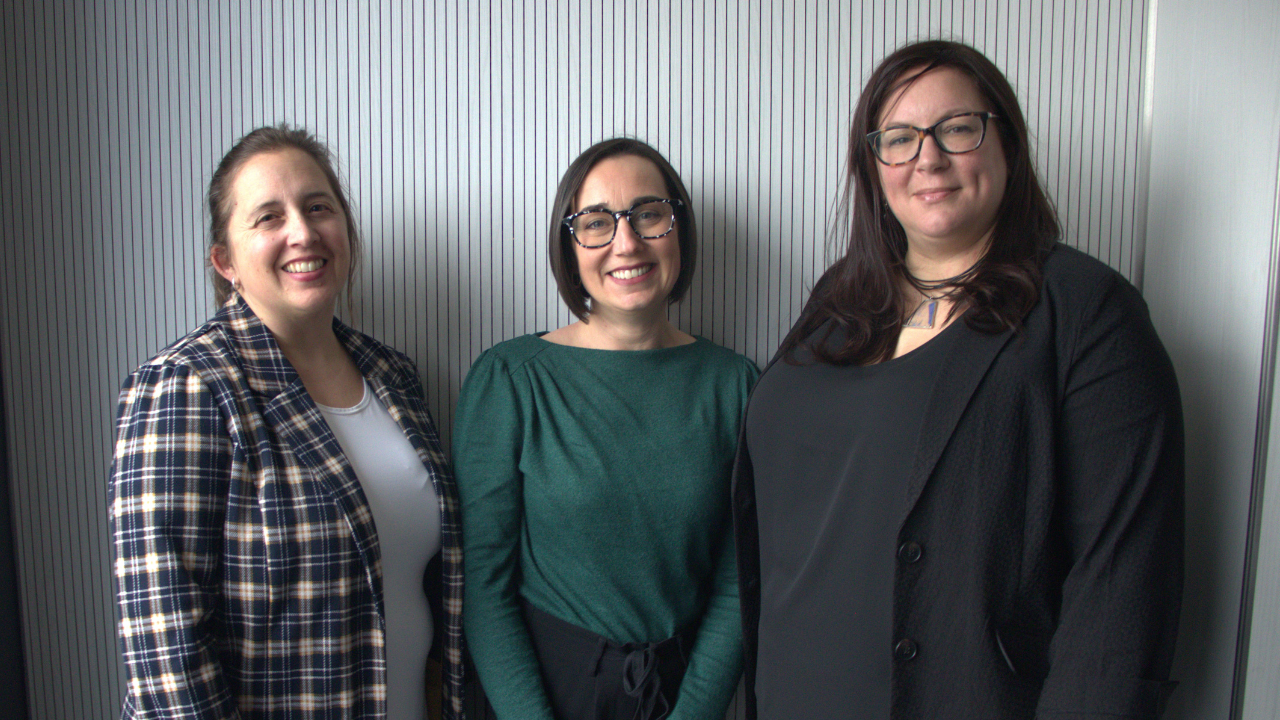
UNITE is led by Dr. Jenny Baechler, Senior Instructor in the Faculty of Management at Dalhousie University, Dr. Jill Chorney, Scientific Lead for Mental Health and Addictions at IWK Health and Associate Professor in the Department of Psychiatry at Dalhousie University, and Dr. Lori Wozney, Sun Life Chair in Youth Mental Health at Dalhousie University and IWK Health and Assistant Professor, Department of Psychiatry at Dalhousie. With a team of over 40 members and 20 partner organizations, UNITE will partner with researchers from various disciplines, decision-makers, youth, and community advocates.
UNITE will focus on three main areas:
- Optimizing current efforts in navigation so that youth, their families and those working with them have a more supportive, compassionate and efficient experience as they find their way to care.
- Increasing the insights from data collected across sectors so that services can be more effective and equitable.
- Improving the capacity for people and groups who work in complex systems to undertake innovations together more effectively.
WHAT ARE THE EXPECTED OUTCOMES?
This FRI will advance system-wide innovations for a more effective, efficient, and equitable youth mental health and addictions service system. It will enable a more supportive and compassionate care experience for youth and those who support them, and it will generate evidence that can be translated to other jurisdictions and societal challenges.
Learn more about Focused Research Investments (FRI) and the first ever recipients.